
The Worst Year of My Life — and How It Shaped Me as a Trainee Sport Psychologist
When I started my MSc in Sport and Exercise Psychology at Loughborough University between 2017-18, I imagined it would be one of the best years of my life.
I pictured myself developing as an athlete, achieving a first-class degree, and being coached by George Gandy, one of the UK’s most respected athletics coaches, who had coached Olympic gold medallist, Sebastian Coe. Everything felt aligned.
Instead, it became the worst year of my life.
A Series of Unfortunate Events
Firstly, I picked up multiple injuries and couldn’t race at the BUCS Cross Country Championships — a long-term goal of mine, particularly representing Loughborough. While my peers were in London enjoying the event, I was alone in my student accommodation, crying my eyes out. I avoided social media and felt isolated, with my family living in Ireland.
My mental health spiralled, and for the first time, I seriously considered quitting athletics. I eventually sought counselling through the university, which became an important first step in learning how to cope.
Just as I was beginning to regain some equilibrium, another bombshell landed. My former coach at Sunderland Harriers, Ken Jefferson, passed away a week before my final exam (see Figure 1).
Ken was far more than a coach. He took a genuine interest in me as both an athlete and a person. I learned so much from him, and hearing of his death was incredibly difficult to process.
Ten days after his funeral, I underwent surgery. With running no longer available as an outlet, I felt physically and emotionally exhausted, struggling to process grief, injury, and academic pressure all at once.
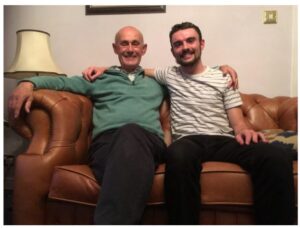
Figure 1: Me with my former coach, Ken Jefferson, before he passed away in May 2018.
Graduation: When Achievement Felt Like Failure
These experiences inevitably affected my studies. Up until then, my academic record had been strong, but I graduated with a pass.
My family tried to reassure me that getting through the course was still an achievement, but graduation day felt anything but celebratory. I cried throughout the day, overwhelmed by a sense of failure and loss.
My head was filled with thoughts such as:
“This result defines me.”
“I’m worthless.”
“I’ve failed.”
“I’ll never get this opportunity again.”
“I’ll never be the athlete I once was.”
While my course-mates celebrated the end of a chapter, I felt like I was mourning the future I believed I had lost.
My Thought Process
I have always been competitive and intrinsically motivated to succeed. Before athletics, I played Gaelic football (see Figure 2), and from a young age I felt pressure to perform.
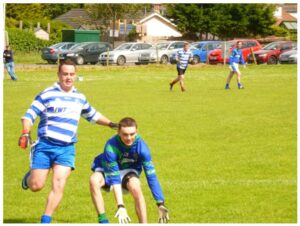
Figure 2: Playing for St. Sylvester’s GAA Club aged 17. I felt a huge expectation to perform as a young athlete.
In Ireland, Gaelic football is more than a sport; for many people it is part of their identity. My dad, who grew up in Donegal during ‘The Troubles’, was passionate about the game. Like many parents and coaches of that era, feedback often focused on what went wrong:
“Your shooting was terrible.”
“You’re not fit enough.”
Over time, I internalised unhelpful beliefs such as:
“If I play well, I am valued.”
“If I play badly, I’ve let people down.”
“If we lose, it’s all my fault.”
Achievement became tied to identity.
What I Learned Through REBT
During my QSEP Stage Two training, I was introduced to Rational Emotive Behaviour Therapy (REBT). It helped me understand something simple but powerful:
It wasn’t only the events causing my distress — it was the beliefs that underpinned them.
“I must perform.”
“I must achieve a first-class degree.”
“I must not fall short.”
“If I fail, then I am a failure.”
At the time, these beliefs felt like facts. Because they were so absolute, every setback became a personal condemnation rather than a challenge to work through.
REBT taught me to question those demands and separate performance from self-worth. Most importantly, REBT taught me unconditional self-acceptance.
“I am worthwhile — regardless.”
Ambition remains. Performance matters. But my worth is not defined by outcomes.
I reflect on how different that year could have felt had I known about REBT earlier. I wish I had known I could pursue excellence without condemning myself when things did not go to plan.
Overcoming Adversity
In February 2020, as an alumni member of Loughborough, I finally ran the BUCS Cross Country Championships in Edinburgh. It remains the proudest moment of my athletics career, and I was fortunate to share it with George Gandy (see Figure 3), before he sadly passed away in October 2020. The race I missed during my time at Loughborough began to fade and was replaced by a moment of pride, perspective, and gratitude.
Although I was injured during my time at Loughborough, it also made me appreciate how fortunate I was to be supported by George Gandy. He was invested not only in my development as an athlete, but in me as a person beyond the track. I am grateful for the time and support he gave me in an extremely difficult period in my life.
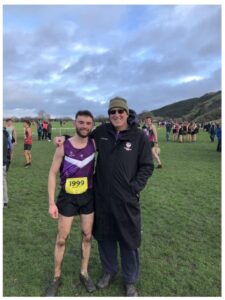
Figure 3: George Gandy and I at the BUCS Cross Country Championships in Edinburgh in February 2020.
That experience, alongside learning REBT, now shapes how I support athletes navigating injury, grief, transition, and performance pressure. Having lived through those challenges has motivated me to listen, learn, and help others.
Yes, it was the worst year of my life, but I can look back now and say that I have chosen the right profession in life.
A Message to Myself — and Others
If I could go back to my graduation day (see Figure 4), I’d put my arm around a distraught Liam and say:
“Liam, you are not defined by this result. You are not worthless, nor a failure. You got through the course, and you have chosen the right path. It will work out in the end.”
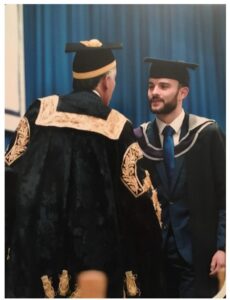
Figure 4: Shaking hands with Sebastian Coe at my graduation — a moment that, at the time, felt more like a funeral.
Anyone who knows me well knows that I love music. And as Mick Jagger says:
“You can’t always get what you want… but if you try sometimes, you just might find, you get what you need.”
I hope this resonates with anyone going through a difficult period. If you are struggling with setbacks or difficult times, reach out for support — you can contact Samaritans at 116 123 (24/7 service) or speak to your GP.
| My background:
I am currently in the final year of the British Psychological Society QSEP Stage 2 qualification, working towards becoming an HCPC-registered Sport and Exercise Psychologist. I am also a long-distance runner with a keen interest in a wide range of sports, including soccer, cricket, swimming, golf, and tennis. Work Experience: I have delivered workshops introducing psychological skills training to coaches and athletes who may have limited awareness or knowledge of sport psychology. I work closely alongside coaches to ensure the content I deliver aligns with their objectives and performance goals. Rational Emotive Behaviour Therapy (REBT), a cognitive-behavioural approach, has also enhanced my own self-awareness as an athlete, helping me recognise patterns in my thinking and how I previously linked self-worth to performance outcomes. By integrating psychological skills training alongside REBT, I support clients in developing practical tools for performance and wellbeing. As a practitioner, my values focus on helping clients reduce unnecessary psychological distress while maintaining ambition and high standards in demanding environments. Take-Homes: I am able to adapt my approach to suit different age groups, including both under-18 and adult athletes, ensuring sessions remain interactive, engaging, and appropriate to their needs. I place importance on building rapport by showing genuine interest in the athlete both as a person and as a performer, while maintaining professional boundaries around athlete consent and confidentiality. I have experience working within multidisciplinary teams, remaining impartial, and demonstrating professionalism and responsibility as a trusted practitioner, while also supporting athlete autonomy in decision-making throughout the process. Any advice for others completing a work placement: First impressions matter. It is important to research clubs thoroughly and demonstrate genuine interest when making contact by clearly outlining your services and how they can benefit both the club and its athletes. Ethical practice is essential, ensuring your work aligns with the club’s and NGB’s safeguarding policies. Establishing a confidentiality agreement helps ensure all relevant parties understand the nature and boundaries of the work being undertaken. It is also important to stay up to date with policy changes and to have a clear philosophy and professional approach before beginning practice. |
Author Bio
| I currently work within the NHS National Diabetes Prevention Programme, supporting pre-diabetic service users to make healthier lifestyle changes. I also have experience as a trainee sport and exercise psychologist across football, cycling, cricket, and swimming in the UK.
I work alongside coaches at club and national level, providing athletes with psychological support to enhance performance and wellbeing. By applying Rational Emotive Behaviour Therapy (REBT) in individual and group settings, I help athletes identify irrational beliefs, challenge unhelpful thought patterns, and develop more rational perspectives by integrating psychological skills training. |