
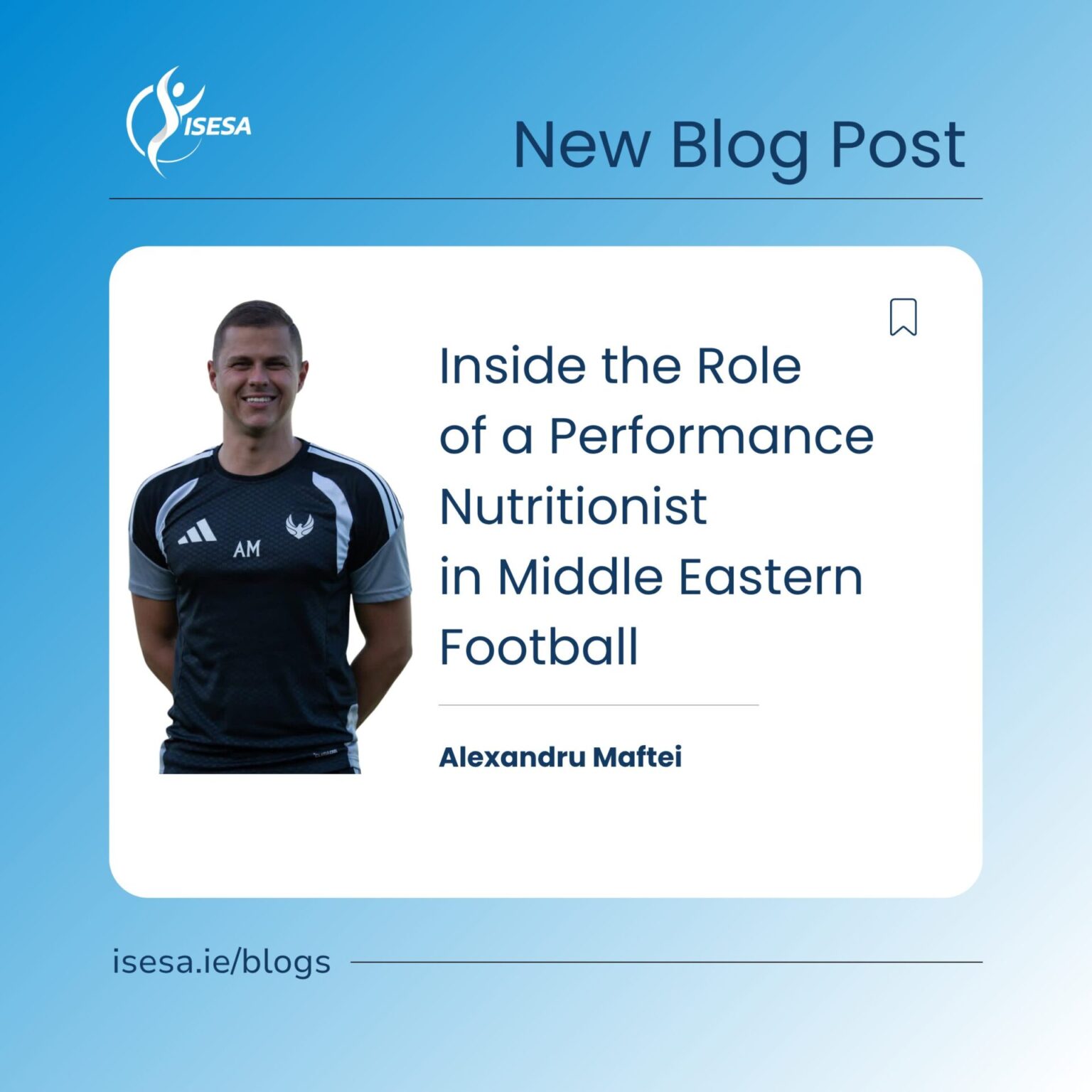
My background:
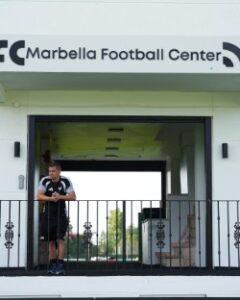 My journey into performance nutrition started with a degree in Nutrition and Dietetics in Romania, followed by an MSc. in Sport and Exercise Nutrition at Leeds Beckett University. I am an authorised Dietitian in Romania and a practitioner registrant of the Sport and Exercise Nutrition Register (SENr) in the UK.
Over the past several years, I have worked across different performance environments, including professional football and elite swimming. My work with the Romanian national swimming squads included supporting athletes through Olympic preparation cycles and major international competitions, while my experience in football has ranged from academy and individual player support to my current role as Performance Nutritionist at Al Arabi SC in Qatar.
Alongside my work in elite sport, I am the founder of Nutritik Performance, a private performance nutrition practice in Bucharest, Romania, where I am building a team of performance nutrition specialists and integrating metabolic and physiological testing into individualised athlete support.
Alongside my applied work, I have maintained a strong interest in athlete assessment, body composition, energy requirements and the integration of physiological testing into individualised nutrition strategies. My academic work has also included research examining changes in resting metabolic rate, body composition and dietary intake across an elite athlete’s training macrocycle.
The role:
 I currently work as the Performance Nutritionist at Al Arabi SC in Qatar, supporting the first team across training, competition, recovery and rehabilitation. On paper, the role may sound straightforward: make sure players are appropriately fuelled, hydrated and recovering well. In reality, working in professional football in the Middle East involves much more problem-solving than that.
One of the main challenges is the environment itself. The facilities available are not necessarily what people might imagine when thinking about professional football. At the training ground, we do not have our own kitchen or a canteen where meals can be prepared and served to the players. This makes controlling food availability and quality much more difficult and means that many nutritional decisions require practical alternatives. Rather than simply designing the “perfect” nutrition strategy, a large part of my job is finding the best solution within the resources we actually have.
My day-to-day work follows the training and match schedule. Nutritional strategies are adjusted according to training load, match proximity, recovery demands, body-composition goals and individual player needs. Match-day nutrition involves planning carbohydrate availability, hydration, pre-match and half-time options and post-match recovery, while training days require similar decisions around fueling and recovery depending on the demands of the session.
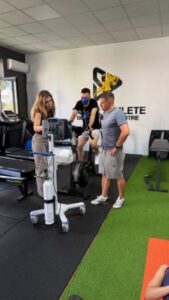
Monitoring gives us another layer of information. Skinfold assessments are generally performed every four to six weeks to monitor changes in body composition, while urine assessments are carried out on MD-2 to provide an indication of hydration status as the players approach competition. Body mass and other individual information can then be considered alongside these measures rather than relying on one number in isolation.
Another major part of the role is dealing with people, not just nutrition. Cultural differences can be challenging. Players come from different backgrounds and may have very different experiences of professional sport, nutrition and daily routines. Some players are less accustomed to highly structured working routines or to consistently following certain professional standards around nutrition, recovery and preparation. That means simply telling a player what they should do is rarely enough.
This is where communication and behaviour change become particularly important. Sometimes progress comes from introducing one small habit rather than trying to change everything at once. At other times, the solution is environmental: making the right foods more accessible, organising recovery options in the dressing room, working with hotels or external catering providers, or simply making the better choice the easiest choice for the player.
The role therefore requires constant collaboration with coaches, medical and performance staff, chefs, hotels and external food providers. Whether preparing for a match, managing nutrition during an overseas camp, supporting an injured player or helping someone improve their body composition, science provides the foundation. The real challenge is making that science work within the reality of the environment, the culture and the individual player.
Any advice for anyone interested in a similar role:
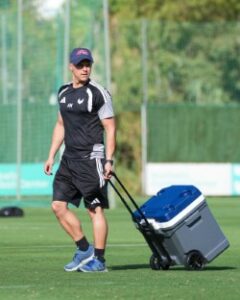 My main advice to a new practitioner would be to ask questions, observe and listen. When you enter professional sport, there is a natural desire to prove your value, show how much you know and demonstrate how hard you are prepared to work. However, sometimes the best thing you can do at the beginning is simply observe. Understand how the environment works, how decisions are made and what the players and staff actually need before trying to change things.
Be prepared to make mistakes as well. Everyone does. What matters is how quickly you recognise them, find a solution and move forward, rather than spending too much time worrying about what went wrong.
I would also say: don’t make a fuss out of nutrition. Nutrition is important, but it is not the most important thing happening every day in a football club. Player wellbeing and the needs of the team sometimes have to come first, and you need to understand your place within that system. You don’t want to create unnecessary friction or have the changing room against you because you are trying to impose the theoretically perfect nutritional strategy.
I like to think of the practitioner as one wheel in a much bigger system rather than the engine itself. The team will continue to function without you, but your job is to help that system operate better, more consistently and for longer. That requires working alongside coaches, doctors, physiotherapists, strength and conditioning coaches and other practitioners rather than trying to operate independently.
Finally, stay true to yourself. Don’t try to become somebody else because you think that is how a performance nutritionist should behave. Learn to speak the players’ language and put yourself in their shoes. Nobody in a changing room really cares about your degrees, qualifications or professional journey if you cannot communicate with them, understand their reality and ultimately help them.
Scientific knowledge gives you the foundation, but knowing when to speak, when to listen and how to work with people is what allows you to apply it.
Author Bio
Alexandru Maftei is a Performance Nutritionist currently working with Al Arabi SC in Qatar and the founder of Nutritik Performance, a private performance nutrition practice in Bucharest, Romania, where he is developing a team of performance nutrition specialists and integrating metabolic and physiological testing into athlete support. He is an authorised Dietitian in Romania and a SENr practitioner in the UK, with an MSc in Sport and Exercise Nutrition from Leeds Beckett University. His applied experience spans professional football and elite swimming, including involvement across the Paris 2024 Olympic cycle and the ongoing LA 2028 cycle, as well as major international competitions.